
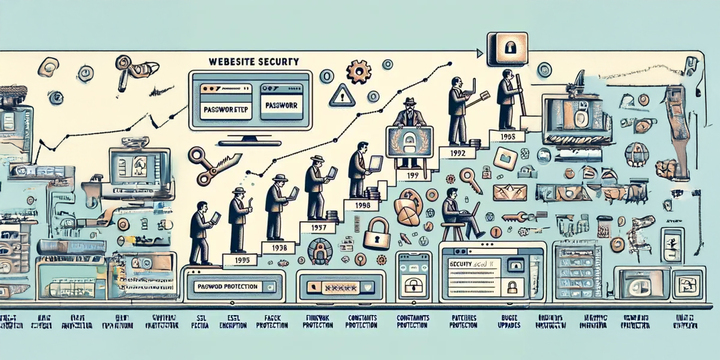
The Evolution of Website Security: What Has Changed?
Website security has come a long way. Years ago, a simple password and a basic firewall felt like enough to keep a site safe. Today, things look very different. With more data online and more people relying on websites for shopping, communication and business, the stakes are much higher.
Below is a clear look at how website security has changed over the years and what it means for small and medium-sized businesses.
1. The Early Web: Simple Sites, Simple Risks
In the late 1990s and early 2000s, most websites were nothing more than static pages. They didn’t store much information and didn’t interact with users. Because of this, security was basic. A password here, a software update there, and that was usually enough.
DDoS attacks existed, but they were far less common. Most people felt the internet was safe because it was still relatively small.
For small businesses at the time:
Security was cheap and simple, but the online world was limited too.
2. Dynamic Sites and New Security Problems
Everything changed when websites became dynamic and started working like small applications. Platforms like WordPress made it easy for anyone to create a website, but they also opened the door to new types of attacks.
Techniques such as SQL injection and Cross-Site Scripting (XSS) became common, and attackers learned how to exploit small mistakes in code or outdated plugins.
Business owners quickly realised they needed to pay attention to basics such as:
• keeping WordPress and plugins up to date
• securing the server properly
• using tools that detect unusual or suspicious activity
These simple steps made a big difference and reduced many of the most common risks.
3. HTTPS Becomes Essential
In the mid-2010s, website security made a major leap forward with HTTPS becoming the standard. Instead of being “nice to have”, encryption became necessary for trust, SEO and safe handling of personal data.
SSL certificates encrypt the information exchanged between a website and its visitors, making it much harder for attackers to intercept or read it.
Free and automated services such as Let’s Encrypt helped smaller businesses secure their sites without extra cost.
Why it matters for businesses:
• customers trust secure sites more
• Google ranks HTTPS sites higher
• it protects logins, payments and personal data
4. Modern Security Tools: More Than Just Passwords
Over time, attacks became more advanced, and simple protection wasn’t enough. This led to the rise of tools like:
• Multi-Factor Authentication (MFA)
• website firewalls
• malware scanners
• real-time monitoring plugins
At first MFA felt like an extra step, but it quickly became one of the easiest ways to stop attackers from taking over accounts.
Security plugins such as Wordfence or Sucuri helped block malicious traffic, scan files and warn owners when something wasn’t right. These tools are now standard for anyone running a business online.
5. AI and Machine Learning: Smarter Protection
The newest stage of website security involves AI. Instead of waiting for known threats, AI systems analyse patterns, behaviour and traffic to spot problems early. They can react faster than humans and catch attacks that don’t follow traditional patterns.
For example, an AI system can notice that a usually quiet website suddenly receives hundreds of login attempts from different countries and block the traffic before damage is done.
For small businesses, AI-powered security means:
• early detection of unusual activity
• fewer false alarms
• less time spent on manual checks
• a safer website even without in-house expertise
Security Is Now a Shared Responsibility
From simple static pages to complex applications protected by encryption, firewalls and AI, website security has changed dramatically. But one thing has stayed the same: every website owner plays a part in keeping their site safe.
For small and medium-sized businesses, strong security isn’t only about preventing attacks. It’s about protecting customer trust, avoiding expensive downtime and keeping the business running smoothly.
Modern hosting platforms and tools make it easier than ever, but staying informed and making small, consistent improvements still matter the most.
—
Power your business with Solutions from DigitalSpace
At DigitalSpace, we have a wide range of easy-to-use services designed to help businesses get online and get found.
Our Services Include:
– Directory Listing Services: Get found where potential customers are looking. Boost your business’s online exposure by getting listed in top online directories such as Google, Facebook, and more.
– Online Reputation Management: Build up your online reputation by using our comprehensive tools to capture online reviews, respond to them quickly, build up positive reviews, and promote them on your website.
Get started today!
Our Digital Experts at Digital Space are here to assist you.
Contact Us.
Email: support@digitalspace.net
Call: 1-888-740-0502
Website: https://www.digitalspace.net
—
digitalspace.net
Get your business up & running online | DigitalSpace
DigitalSpace offers a wide selection of products to help you get online, get found and grow your business. Get started today!
