
Understanding the Customer Journey in Digital Marketing
Understanding the Customer Journey in Digital Marketing
In digital marketing, results rarely come from a single touchpoint. Customers move through a sequence of steps, often across multiple channels, before they buy and after they buy. Understanding that sequence helps you create more relevant content, reduce friction in the buying process, and improve retention.
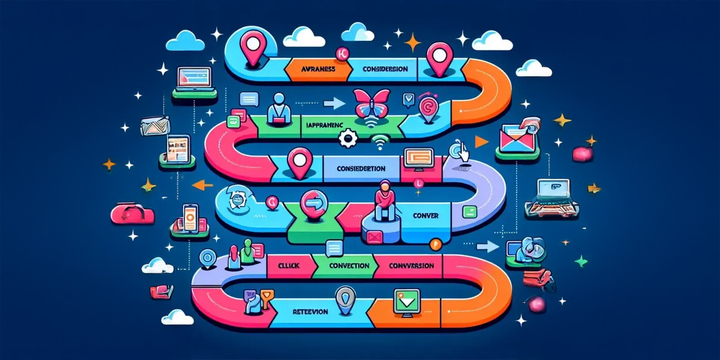
The customer journey is the end-to-end experience a person has with your brand, from first awareness through to post-purchase use and loyalty. While every journey varies, most follow four practical stages: Awareness, Consideration, Decision, and Post-Purchase.
What is the customer journey?
The customer journey describes how a potential customer:
-
realises they have a need,
-
evaluates options,
-
chooses a solution, and
-
decides whether to stay with that choice over time.
For marketers, it is a planning tool. It tells you what questions people are trying to answer at each stage and which barriers are most likely to block progress.
Stage 1: Awareness
At the awareness stage, someone recognises a problem or goal but may not yet know what the solution is, or which brands exist.
Your objective: earn attention and build initial trust.
What works well: educational content that helps people name the problem and understand the implications.
Examples of awareness content include:
-
short explainers (what the problem is, why it matters),
-
beginner guides,
-
simple checklists,
-
high-level videos, and
-
social posts that clarify a misconception.
Avoid pushing for a sale too early. If the content feels overly promotional, people tend to leave before they have any reason to care.
Stage 2: Consideration
In consideration, the customer is comparing approaches and providers. They are looking for proof, clarity, and risk reduction.
Your objective: help them evaluate you fairly and confidently.
What works well: information that answers “Is this right for me?” and “Why you over others?”
Useful assets at this stage include:
-
product pages with clear positioning and outcomes,
-
case studies (with context, not just claims),
-
testimonials that speak to specific objections,
-
comparison pages (feature, value, constraints), and
-
FAQs on common “deal-breakers”.
This is also where personalisation matters. Behaviour-based email sequences, retargeting, and sales enablement content can move people forward without feeling intrusive.
Stage 3: Decision
The decision is where intent is high, but the customer can still abandon due to friction or uncertainty. A confusing checkout, unclear pricing, or weak reassurance can derail conversion.
Your objective: remove barriers and make the next step obvious.
What works well: simple processes, transparent pricing, and visible support.
Focus on:
-
reducing steps in checkout or sign-up,
-
providing payment flexibility where appropriate,
-
making policies easy to find (refunds, cancellations, guarantees),
-
offering live chat or fast-response support, and
-
using concise, specific calls to action.
Small details matter here. A slow page, an unclear form error, or hidden fees can cost the sale.
Stage 4: Post-purchase
Post-purchase is where long-term value is created. Retention, upsell, referrals, and advocacy all begin after the transaction.
Your objective: help customers succeed and keep earning trust.
What works well: onboarding, support, and ongoing value.
Common post-purchase tactics include:
-
a short onboarding flow (email or in-app),
-
usage tips and “getting started” resources,
-
proactive support (before frustration turns into churn),
-
feedback requests timed to actual usage, and
-
community or knowledge base content that reduces reliance on support.
The key question is not “Did they buy?” but “Did they achieve the outcome they expected?”
Monitoring and improving the journey
Customer journeys change over time, so treat this as an ongoing cycle rather than a one-off diagram.
Track a small set of metrics per stage, such as:
-
Awareness: reach, engaged sessions, returning visitors
-
Consideration: time on key pages, content downloads, demo requests
-
Decision: conversion rate, checkout abandonment, sales cycle length
-
Post-purchase: activation rate, retention rate, support tickets, churn
Use analytics, user feedback, session recordings, and support conversations to identify friction. Then test changes in small iterations. Consistent improvements compound.
Conclusion
A customer journey is not a slogan or a funnel graphic. It is a practical way to match messaging, content, and product experience to what customers need at each step. When you align your marketing to the journey, you reduce wasted spend, increase conversion quality, and build retention through real customer outcomes.
—
Power your business with Solutions from DigitalSpace
At DigitalSpace, we have a wide range of easy-to-use services designed to help businesses get online and get found.
Our Services Include:
– Directory Listing Services: Get found where potential customers are looking. Boost your business’s online exposure by getting listed in top online directories such as Google, Facebook, and more.
– Online Reputation Management: Build up your online reputation by using our comprehensive tools to capture online reviews, respond to them quickly, build up positive reviews, and promote them on your website.
Get started today!
Our Digital Experts at Digital Space are here to assist you.
Contact Us.
Email: support@digitalspace.net
Call: 1-888-740-0502
Website: https://www.digitalspace.net
—
digitalspace.net
Get your business up & running online | DigitalSpace
DigitalSpace offers a wide selection of products to help you get online, get found and grow your business. Get started today!
