
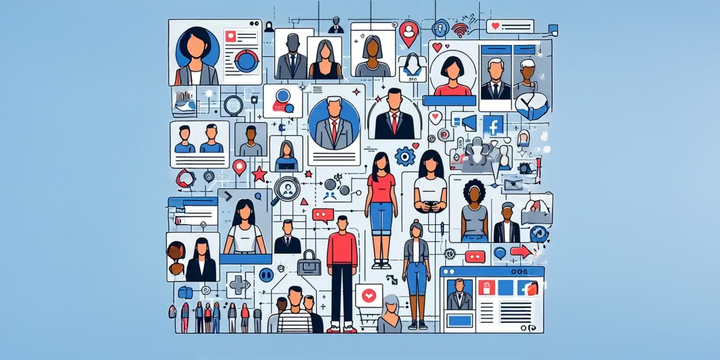
Customer Personas: How to Improve Online Engagement
Understanding customer personas is one of the simplest ways to improve online engagement. When you know who your audience is, what they need, and how they make decisions, it becomes much easier to create content, offers, and website experiences that feel relevant.
Today, online audiences expect more than generic messaging. They respond better to brands that understand their goals, pain points, and preferences. That is why customer personas still matter. In fact, they are even more useful now when businesses are trying to personalise content across websites, email, search, and social media.
What are customer personas?
Customer personas are detailed profiles of your ideal customers. They are based on real research, customer data, and behavioural patterns. A strong persona helps you understand not only who a customer is, but also what motivates them to act.
A customer persona often includes:
-
age or career stage
-
goals and priorities
-
pain points and frustrations
-
buying behaviour
-
preferred channels
-
common objections
-
digital habits
In simple terms, a persona helps you stop writing for “everyone” and start speaking to the right people.
Why customer personas matter
Many businesses struggle with engagement because their messaging is too broad. They publish content, run campaigns, and design pages without a clear picture of who they are trying to reach.
Customer personas solve that problem.
When you build your strategy around real audience segments, you can create more relevant experiences. As a result, users are more likely to stay on your site, interact with your content, and convert.
1. Better targeted marketing
Customer personas help you create marketing that speaks to real needs. Instead of using a single generic message for everyone, you can tailor your language, offers, and calls to action to different audience groups.
For example, a small business owner seeking reliable hosting may prioritise uptime and support. Meanwhile, an agency may focus on scalability, white-label options, and account management. Those audiences should not receive the same message.
2. Stronger website content
Personas improve the way you write website copy. You can answer the right questions, remove friction, and highlight the benefits that matter most to each group.
This makes your website more useful. It also makes it more persuasive.
If your visitors feel understood, they are more likely to engage with your content and move to the next step.
3. More effective personalisation
Personalisation has become a core part of digital marketing. However, it only works when it is based on a clear understanding of your audience.
Customer personas give structure to that process. They help you decide which content to show, which emails to send, and which offers to promote to different users. This is especially important as brands rely more on first-party data and behavioural signals to improve relevance across channels.
4. Better product and service decisions
Personas are not only useful for marketing teams. They also help shape products, services, and support processes.
When you know what matters to customers, you can make smarter decisions about features, onboarding, pricing, and customer support. This often leads to a better overall user experience and stronger customer retention.
How to create customer personas
Creating customer personas does not need to be complicated. The key is to use real evidence rather than assumptions.
Start with your existing data
Look at the data you already have. Useful sources include:
-
website analytics
-
search queries
-
customer support questions
-
CRM data
-
sales feedback
-
email performance
-
survey responses
-
social media insights
This will help you see who your audience is and how they behave.
Identify patterns
Next, look for common traits. Do certain groups visit the same pages? Do they ask similar questions before buying? Are they motivated by price, speed, support, or ease of use?
These patterns will help you define meaningful audience segments.
Build clear persona profiles
Once you see the trends, create simple persona profiles. Each one should include:
-
background
-
goals
-
challenges
-
buying triggers
-
objections
-
preferred content types
-
best communication channels
Keep each persona practical. It should be useful to marketers, content writers, designers, and sales teams.
Validate and update them
Customer personas should not stay static. Markets change, customer expectations shift, and digital behaviour evolves.
Review your personas regularly. Use fresh data, campaign results, and customer feedback to refine them over time. This is especially important now, as consumer behaviour is becoming more fragmented and less predictable across channels and segments.
How to use customer personas in your marketing strategy
Once your personas are ready, use them across your digital activity.
Content marketing
Create blog posts, landing pages, guides, and FAQs around each persona’s needs. Focus on the problems they are trying to solve, not only the products you want to sell.
Email marketing
Segment your email campaigns by persona. This helps you send more relevant messages and improve open rates, clicks, and conversions.
Paid advertising
Use personas to sharpen audience targeting and ad messaging. Different customer groups respond to different pain points, value propositions, and calls to action.
Website optimisation
Review your homepage, service pages, navigation, and conversion points through the lens of each persona. Ask whether the page answers their questions clearly and quickly.
Customer support and sales
Personas can also help support and sales teams handle objections more effectively. When teams understand the customer’s priorities, they can guide conversations more confidently.
Common mistakes to avoid
Some businesses create personas once and never use them. Others make them too vague to be useful.
Avoid these common mistakes:
-
relying on guesswork instead of data
-
creating too many personas
-
focusing only on demographics
-
ignoring motivations and pain points
-
failing to update personas over time
A good persona should be simple, evidence-based, and easy to apply in daily work.
Final thoughts
Customer personas are still one of the most useful tools for improving online engagement. They help businesses understand their audience, personalise communication, and build better digital experiences.
In a crowded online space, relevance matters. When your content, messaging, and website reflect real customer needs, engagement becomes easier to earn.
If you want stronger results from your digital marketing, better customer personas are a smart place to start.
—
Power your business with Solutions from DigitalSpace
At DigitalSpace, we have a wide range of easy-to-use services designed to help businesses get online and get found.
Our Services Include:
– Directory Listing Services: Get found where potential customers are looking. Boost your business’s online exposure by getting listed in top online directories such as Google, Facebook, and more.
– Online Reputation Management: Build up your online reputation by using our comprehensive tools to capture online reviews, respond to them quickly, build up positive reviews, and promote them on your website.
Get started today!
Our Digital Experts at Digital Space are here to assist you.
Contact Us.
Email: support@digitalspace.net
Call: 1-888-740-0502
Website: https://www.digitalspace.net
—
digitalspace.net
Get your business up & running online | DigitalSpace
DigitalSpace offers a wide selection of products to help you get online, get found and grow your business. Get started today!
